Change(b)log

  • Once upon a time, 1.000 events ago

    Today, we like to tell you a little bit about the history of // foss.events, how everything began, and what happened in between. While at the same time trying our best not to make the same mistake as the history department in this XKCD comic:
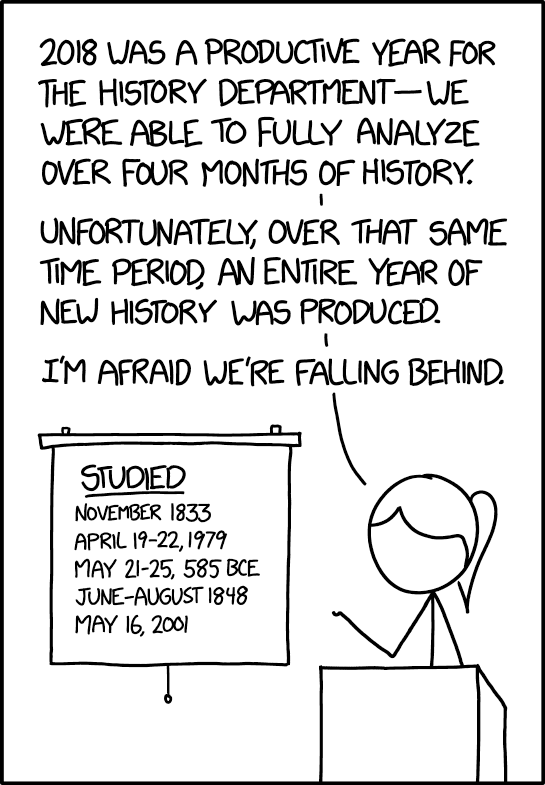
    Permanent link to this comic: https://xkcd.com/2086/

    So, we promise to keep it brief …. well, at least we try to 🙂

    How it all began

    Like so many great open-source projects, // foss.events was born from the idea that work should be shared with others. At the time, Erik Albers was working for the FSFE, and he was always looking out for new FOSS events that might be relevant to his work or the organisation. He started to compile a list of events that he had attended or heard about. But what use is such a useful list after all if it just keep sitting on one’s hard drive? Since the list already existed, it made far more sense to share it with everyone on the internet.

    To minimise the initial effort, a simple pad was created – so to say it was the MVP to host such a list. However, since it was a pad, it didn’t take long for others to start contributing to and expanding it, which demonstrated that there was genuine interest in a collaboratively maintained calendar of FOSS events even at this early stage.

    Next, Erik created a basic static website, which was easier to access and read than a collaborative pad. At the subsequent FOSDEM conference, he was approached by Michael Weimann. Unlike Erik, Michael knew very well how to program. A few months later, the two attended their first joint hackathon together. After several more hackathons and various stages of development, the website evolved into the dynamic, Python-based platform it is today.

    Core Principles

    Although many goals were pursued from the outset, three in particular have had a lasting impact on the culture of // foss.events.
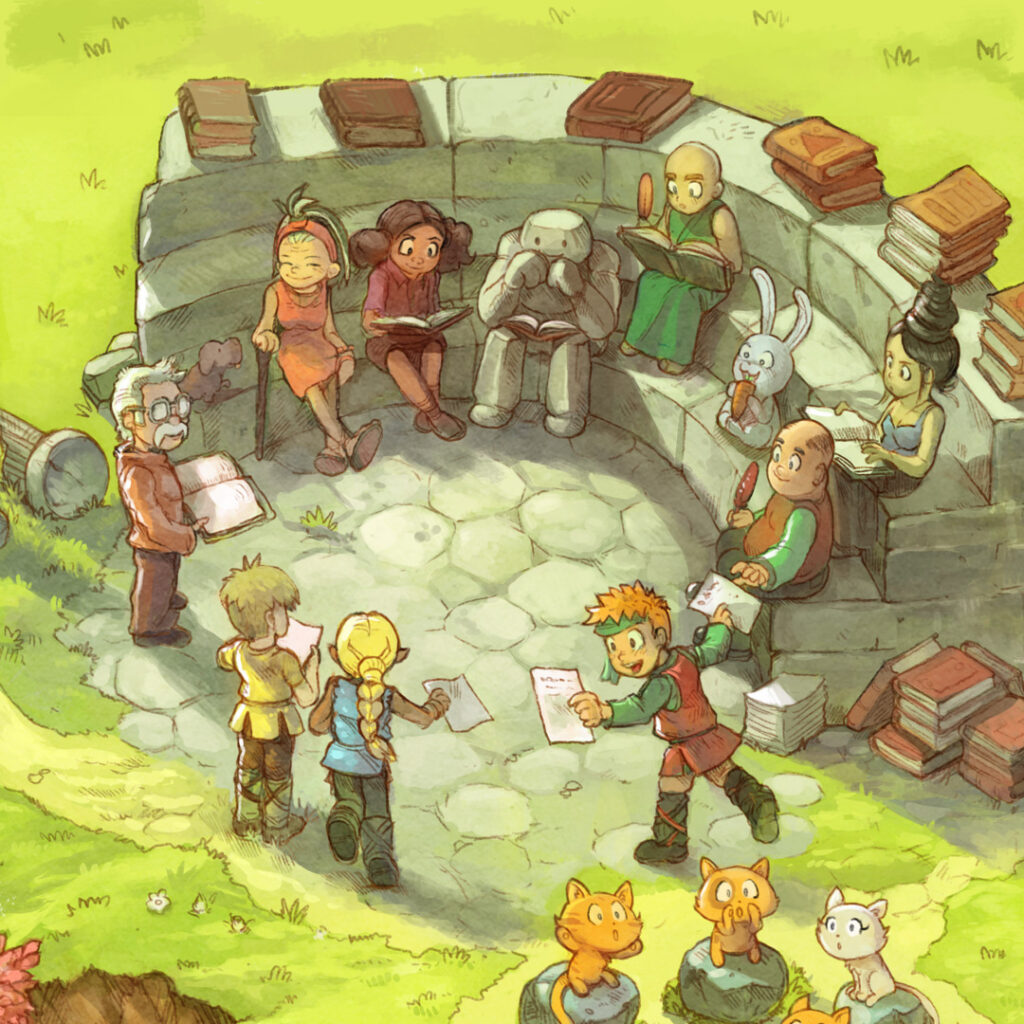
    „C6 Upload“ by David Revoy, framasoft.org − CC-BY 4.0 − AI derivation prohibited

    a) Unity: All events are presented as equals within the calendar, whether they are a specialized gathering of ten people or a conference with thousands of attendees, such as FOSDEM. Similarly, labels or naming ideologies are irrelevant; the only criterion for inclusion on // foss.events is that an event’s core ethos embodies FOSS culture, regardless of the specific terminology it uses.

    b) Community: It has always been clear that this calendar is not an end in itself, but rather something created by and for the community. Consequently, it should be as easy as possible for anyone to maintain the calendar, add new events, or update existing ones. To this end, all interactions can be performed without the need for an account, and we actively encourage the reuse of our data through open interfaces.

    c) Decentralised: From the outset, the calendar has been accompanied by a Mastodon account to reach out to the Fediverse community. This account is used to announce events and share posts (‚toots‘) from other organisers with the wider community. We have always felt most at home in the Fediverse — a community and space that we are committed to supporting. Our long-term vision includes even deeper integration with the Fediverse. Stay tuned for more on this in future blog posts!

    Result

    What can we say? Our expectations have been exceeded. You are the best <3, and you have turned this calendar into more that we could have ever though of: Europe’s possibly most well-known decentralised and community-maintained FOSS calendar, created by the community, for the community.
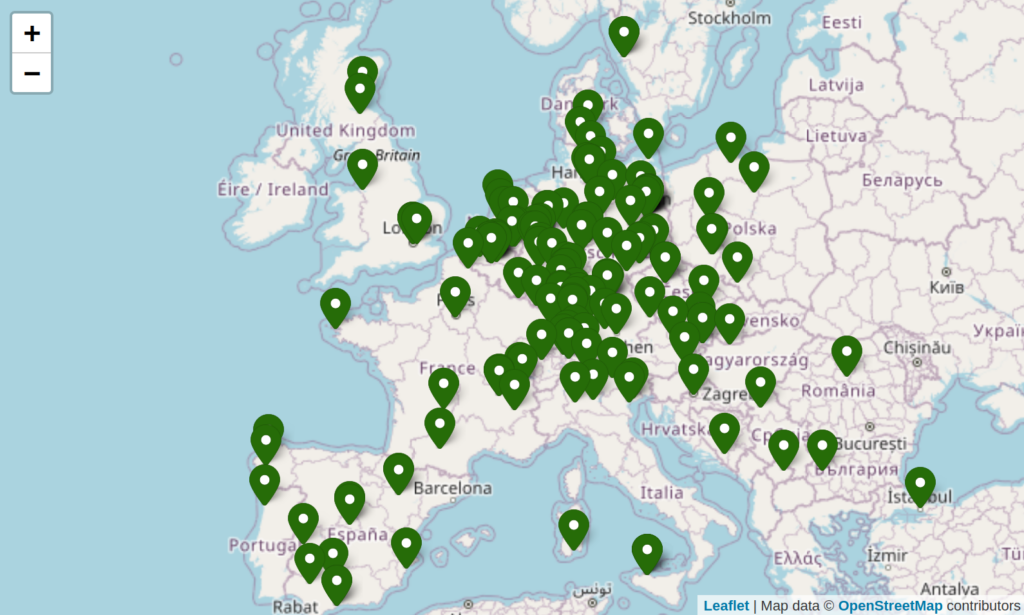
    Frontpage of // foss.events showing events in 2025

    Although we plan to publish a dedicated post about the numbers and statistics later, we can already reveal that our Mastodon account has surpassed 3.100 followers and that you have added over 1.000 events. Even better, we are seeing more and more of you actively maintaining your event pages, continuing to update or correct details long after the initial entry.

    This is truly invaluable and is what drives us to do all of this: from you, with you – as a gift to the FOSS community and its members.

    Side Note

    As part of our story is that we have also attempted to secure grant funding on two occasions. On one occasion we sought to merge with gath.io in order to develop a calendar with Fediverse integration. We applied to the NGI Zero Commons Fund and reached the second round, but ultimately had to withdraw our application for personal reasons. Last year, we tried again – this time aiming to merge // foss.events with another project, Lauti, to create a calendar with expanded Fediverse features. This chapter marks a pivotal moment – a bridge between our past, our present, and our long-term vision -and will therefore be subject of a separate, dedicated blog post.

    As we mentioned at the beginning, our aim was to keep this brief, so we have only been able to provide a rough overview. For more detailed information, please refer to our previous blog posts and our Mastodon account.

  • Reflecting on // foss.events

    While your favorite FOSS calendar continues as usual and, thanks to your help, keeps you up to date on the latest FOSS events in Europe, it’s been quiet on this blog for a while. It’s time to change that and bring you the latest news about // foss.events. After all, there’s a lot to share, and some changes are on the horizon. That’s why we’re going to revive this blog and provide you with background information and an outlook for the future of // foss.events over the next few weeks.

    What to expect

    To start, we’ll take a peek behind the scenes: How did it all begin? What decisions were made, what paths have we taken since then, and what milestones have we reached? Wherever possible—and where it’s of interest—we’ll also try to illustrate this story with some figures and statistics.

    Following that, we want to update you on the project’s current status: Where does the project stand, and how is the community doing? What are the next planned milestones, and what changes will they bring? We’d like to take you on a journey and share our long-term vision for // foss.events. Some of these goals are realistic, others will require your support, and some are ultimately beyond our direct control.

    Why

    Of course, we aren’t doing this without a reason. Two major, transformative changes are on the horizon; we can already reveal that our project will be merging with another, as we share common goals and will be much better positioned by joining forces. It feels right, therefore, to capture the original spirit of // foss.events before we take this step.

    We can also share that, by outlining the project’s current state and presenting a long-term vision, we are looking for new contributors. The project has grown significantly, and we are currently understaffed. So, if you can imagine getting involved with // foss.events—whether in a technical, organizational, or content-related capacity—now is the perfect time to jump in! 🙂

    That’s all for today. With the next post, as mentioned, we’ll dive into the history of // foss.events.

  • Upcoming Challenges & Priorities

    Given the impressive outreach and contributions that we receive with // foss.events so far, we are making up our minds on how we should or should not further grow, always keeping in mind to simply offer the best solution for the general FOSS community. Just recently we outlined certain ideas to grow // foss.events into a Calendiverse and like to complement those ideas today with additional priorities, that we see crucial for the general benefits deriving from // foss.events:

    Scope

    • widen the scope of // foss.events:
      As pointed out in this toot, we do not only like to list events that are about FOSS development and usage solely but we also like to draw attention into other related fields like open science, open hardware etc. With it, we hope to help building bridges among related freedom loving movements.
    • widen the area of // foss.events:
      soo many times we have been asked to include other areas beyond Europe … in particular the United States. Seeing their current political difficulties they run through, it seems even more important to help our freedom fellows in US to connect through their very own events. So, if there is any team / organisation that likes to step up to run and maintain a // foss.events/US please get in contact!

    Sustainability

    • so far we did all in our freetime and we’re just doing it for the cause. But as already pointed out in our Prototype Fund podcast interview this is an interesting model for community driven solutions, but it slows down developments that need more time to get them done. For that reason we like to apply for Funding money, but we do not yet know exactly which one to give a try. If you have hints, you’re always welcome 🙂
    • in the long run we would also love to set up a non-profit organisation that drives the maintenance and developments of // foss.events or the Calendiverse respectively so the whole initiative does not anymore depend on the two of us solely.
  • about // foss.events in the Protoype Fund Podcast

    Erik @dreirik Albers was invited by the Public Interest Podcast from Protoype Fund to talk about // foss.events on the topic of „Open Source without money“. The Prototype Fund is in its own words „the first low-threshold funding program for independent developers in Germany who develop innovative Free and Open Source Software from society and for society.“

    It was a big pleasure and honor for us to be invited and to talk about // foss.events, our main ideas and motivations regarding // foss.events as well as the milestones still in front of us.

    We hope you enjoy listenening, here is the blurb:

    foss.events is an event calendar for – surprise, surprise – FOSS events. The project has been run and developed for years without any money, by Erik Albers, among others, whom we talk to in this episode.

    We talk to Erik about project development in his spare time, motivations and hurdles in a small team, and why it can sometimes even be good for a project when there is no money involved.

  • Calendiverse

    Let’s think big and try to catch two birds ẃith one stone! Bird 1 is to better suit // foss.events in helping cross-border and self-organised communities to organise events. And bird 2 to help further decentralise ours and their respective communication channels. Putting both ideas together, what could be a better fit than the Fediverse for this?

    After several months of discussion and reflections today we like to introduce the idea of a Calendiverse, a frankenword for „The community-driven calendar in the Fediverse“:

    Organising and participating in shared social events is a central activity of many communities. These events provide a space for existing members to meet and exchange ideas, while also serving as an introduction for newcomers. The Calendiverse enables self-organised but decentralised, undefined and even unstable communities – and their potentially anonymous members – to maintain a shared calendar, interacting with it both individually and collectively. Naturally, the calendar is free software/open source, giving users full control over their data, content and access while seamlessly connected to the Fediverse.

    For practical reasons and for the time being you will always find the latest version at https://3rik.cc/calendiverse/calendiverse.en.html

    We are very sorry, we are currently not able to offer a more advanced version of the concept including a version history … we hope to change this in future, for the time being it is simply the easiest way to go.

  • Report from our Hackathon 2024.1

    This weekend we had our first hackathon in 2024 in the city of Franfurt. We had a great time, a lot of fun and we actually finished some long awaited milestones:

    • We now have One map to show them all: With #84 we finally implemented #65 so now the front-page shows a map that shows all upcoming FOSS events of the running year registered on // foss.events. We still have some improvements in mind, see #92 if you are interested in helping.
    • We have a news site! With #85 we introduced our own news page. If you are interested in the latest news about // foss.events and about foss events in Europe make sure to mark this page and keep an eye on it. Again, this is just the the beginning and further improvement will come, in particular we are researching best ways of embedding fediverse feeds as a news-service to foss event visitors. Stay tuned!
    • Thanks to vkrause our event pages and our index page are now delivering structured data following vocabulary by schema.org: With #83 and #91 our event pages and index page are using microdata, introduced by schema.org to deliver easily machine-readable structured data. Structured data shall help crawlers, indexing, APIs etc to integrate and reuse data delivered by // foss.events (e.g. by KDE’s Itinerary). (btw we use Open Database License and Creative Commons for this data, see our about:license)
    • We better deliver concise and structured date we have cleaned up our database and have improved our new event form: On one hand we reduced complexitiy by removing some data fields, on the other hand we cleaned old data using that data fields and we straightened input options for future data.
    • With #67 have started to deliver our pages with semantic HTML: Semantic html helps machines to understand content of webpages, which is again helpful for crawlers, indexing etc but even more for people who need electronic assistance, like screenreaders, for discovering the web. So far we only have the news-page in semantic html, but be assured more pages are to come.
    • Not visible but very important: With #88 fixed a security issue that so far people were able to introduce code with our event-form. This is not possible anymore, but: you can use markdown instead ^^

    And these are just the most obvious changes and milestones. In addition, we fixed a lot of smaller issues and thanks to M we also have a couple of new events on our pages.

    Thanks to @weeman and for the cccffm for having us as guests. And in memory of #37C3 we now have an earworm again of „Captain Kirk is Climbing a Mountain“ : D

  • We have a new help page

    Our new event form is super helpful but unfortunately still a bit overloaded. This is not only but also thanks to old data field that need some clean-up. We understand that for new users this can be overwhelming in the beginning. That is why we have written down a detailed and hopefully helpful help page for you : )

  • New database and backend

    It is done! With PR #303 we have completely rewritten the backend of // foss.events and now have an underlying database.

    Although not visible, this brings several features for users: You can now easily add an event using a web form at https:/ /foss.events/new-event. The web form makes submitting new events much easier than before, when people had to fill out an email template. Submitting events is also much less error-prone, as several fields have a pre-defined set of values you can choose from, ensuring standardised data.

    As well as revising the event submission form, we are also pleased to announce the introduction of ‚edit this event‘ options. Each event page now has an „Edit this event“ button at the bottom of the page. Whenever you see data missing or incorrect, you can click to edit this event and improve the accuracy of an event’s data.

    This new feature also makes it much easier to submit an event if it is a recurring event, especially if it is held in the same location every year. In this case, you can open the previous edition, click „Edit this event“, change the date and probably a few things here and there, and that’s it – submit your new event.

    The new database also makes it much easier to accept submissions in the backend. And faster! Once approved, each event will appear on the front page instantly.

    And we have even more ideas about what we can do with the new database. Stay tuned!

    Unfortunately, the data we used to create our new database has seen a lot of chaos and wild growth, so the web form still has some hiccups. The order of the data is not yet user friendly and there are some unnecessary fields that we will be getting rid of to make it easier for you to contribute. The same goes for some of the defaults you can select that are unnecessary. This will be done over the next few weeks.

    In the meantime, you are very welcome to submit your event](https:/ /foss.events/new-event) and test our new form and give us feedback at contact@foss.events. You are also welcome to help us get things done in the backend and have a look at our issue tracker and see where you would like to contribute.

  • // foss.events now can haz issue templates

    We have created some templates for our issue tracker in our Codeberg repository to streamline bug reports and feature requests for // foss.events. These templates are designed to help you provide detailed feedback, making the process more efficient for both our community and our maintainers. This update will improve our responsiveness and help to resolve issues quickly.

    Remember that // foss.events is a community project and your input is crucial to its continued development. We hope these templates make it easier for us to respond to your needs and for you to contribute effectively.

  • And finally: the dark side!

    We are pleased to enlighten our community by implementing a Dark Mode on // foss.events, a feature that has been requested for long. Dark Mode reduces eye strain and saves battery life, making a perfect match for late-night event exploring or in other low light environments. As usual we keep things in a simple and user-centric design.

    With PR #302 // foss.events automatically adjusts light/dark mode to your system’s light or dark setting. Users who wish to manually change however can easily switch between modes using the sun icon at the top of the page (see PR#304).

    Let us know how you like it and provide us your feedback.