Today, we like to tell you a little bit about the history of // foss.events, how everything began, and what happened in between. While at the same time trying our best not to make the same mistake as the history department in this XKCD comic:
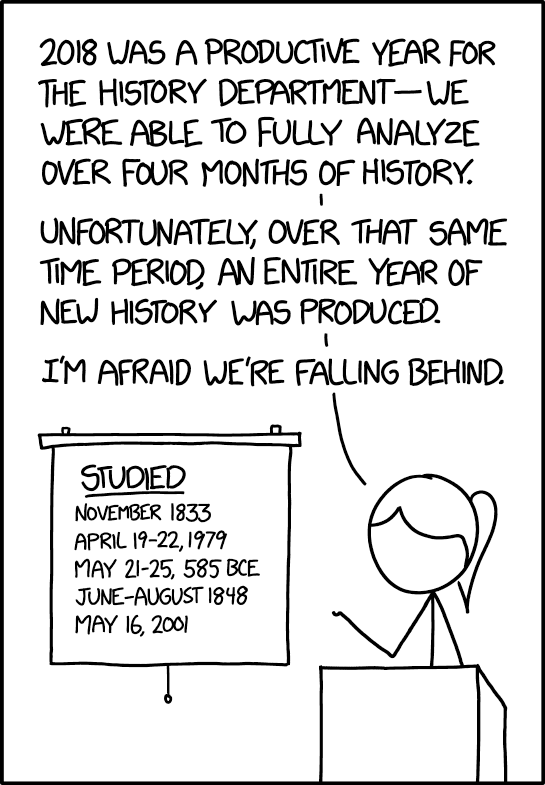
So, we promise to keep it brief …. well, at least we try to 🙂
How it all began
Like so many great open-source projects, // foss.events was born from the idea that work should be shared with others. At the time, Erik Albers was working for the FSFE, and he was always looking out for new FOSS events that might be relevant to his work or the organisation. He started to compile a list of events that he had attended or heard about. But what use is such a useful list after all if it just keep sitting on one’s hard drive? Since the list already existed, it made far more sense to share it with everyone on the internet.
To minimise the initial effort, a simple pad was created – so to say it was the MVP to host such a list. However, since it was a pad, it didn’t take long for others to start contributing to and expanding it, which demonstrated that there was genuine interest in a collaboratively maintained calendar of FOSS events even at this early stage.
Next, Erik created a basic static website, which was easier to access and read than a collaborative pad. At the subsequent FOSDEM conference, he was approached by Michael Weimann. Unlike Erik, Michael knew very well how to program. A few months later, the two attended their first joint hackathon together. After several more hackathons and various stages of development, the website evolved into the dynamic, Python-based platform it is today.
Core Principles
Although many goals were pursued from the outset, three in particular have had a lasting impact on the culture of // foss.events.
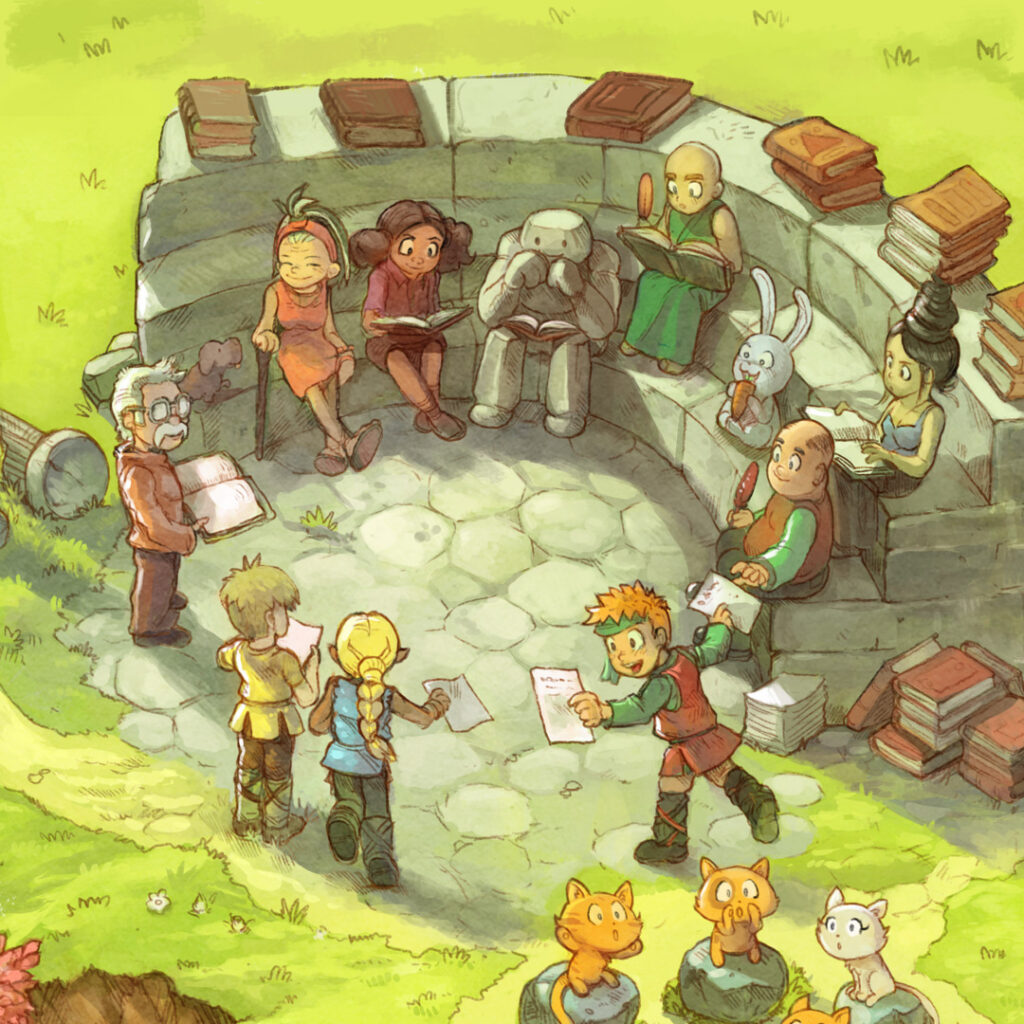
a) Unity: All events are presented as equals within the calendar, whether they are a specialized gathering of ten people or a conference with thousands of attendees, such as FOSDEM. Similarly, labels or naming ideologies are irrelevant; the only criterion for inclusion on // foss.events is that an event’s core ethos embodies FOSS culture, regardless of the specific terminology it uses.
b) Community: It has always been clear that this calendar is not an end in itself, but rather something created by and for the community. Consequently, it should be as easy as possible for anyone to maintain the calendar, add new events, or update existing ones. To this end, all interactions can be performed without the need for an account, and we actively encourage the reuse of our data through open interfaces.
c) Decentralised: From the outset, the calendar has been accompanied by a Mastodon account to reach out to the Fediverse community. This account is used to announce events and share posts (‚toots‘) from other organisers with the wider community. We have always felt most at home in the Fediverse — a community and space that we are committed to supporting. Our long-term vision includes even deeper integration with the Fediverse. Stay tuned for more on this in future blog posts!
Result
What can we say? Our expectations have been exceeded. You are the best <3, and you have turned this calendar into more that we could have ever though of: Europe’s possibly most well-known decentralised and community-maintained FOSS calendar, created by the community, for the community.
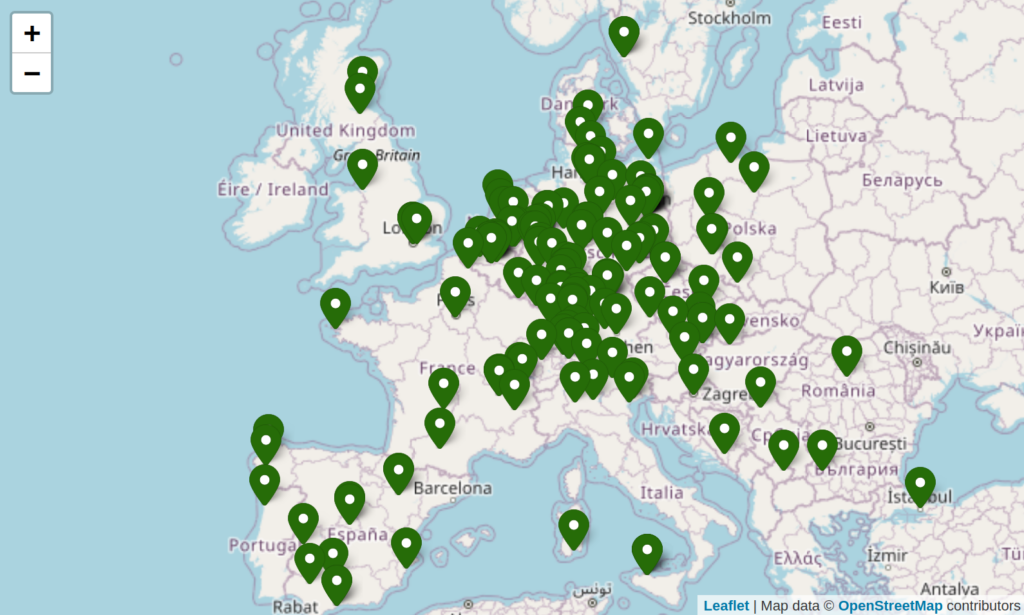
Although we plan to publish a dedicated post about the numbers and statistics later, we can already reveal that our Mastodon account has surpassed 3.100 followers and that you have added over 1.000 events. Even better, we are seeing more and more of you actively maintaining your event pages, continuing to update or correct details long after the initial entry.
This is truly invaluable and is what drives us to do all of this: from you, with you – as a gift to the FOSS community and its members.
Side Note
As part of our story is that we have also attempted to secure grant funding on two occasions. On one occasion we sought to merge with gath.io in order to develop a calendar with Fediverse integration. We applied to the NGI Zero Commons Fund and reached the second round, but ultimately had to withdraw our application for personal reasons. Last year, we tried again – this time aiming to merge // foss.events with another project, Lauti, to create a calendar with expanded Fediverse features. This chapter marks a pivotal moment – a bridge between our past, our present, and our long-term vision -and will therefore be subject of a separate, dedicated blog post.
As we mentioned at the beginning, our aim was to keep this brief, so we have only been able to provide a rough overview. For more detailed information, please refer to our previous blog posts and our Mastodon account.